Airport Transfer Service
Private Airport Transfer Service — Jeddah & Madinah Airports 2026
Fixed-rate airport transfers from KAIA and MED with terminal-specific pickup planning, flight delay coordination, and direct hotel drop-offs.
Routes Linked
4
Price Range
170–1200 SAR
Coverage
Jeddah, Makkah, Madinah
Service overview
Airport arrival is the highest-stress part of Umrah travel for most families, especially when everyone is tired, carrying luggage, and trying to leave a crowded terminal quickly. Our airport transfer service is built for that exact moment: one clear booking, one fixed fare, and one direct handover from terminal to hotel.
We operate across King Abdulaziz International Airport (KAIA) and Prince Mohammad Bin Abdulaziz International Airport (MED). Whether your airline lands at Terminal 1, North Terminal, or the Hajj Terminal flow near KAIA operations, we align your pickup instructions before landing so your group avoids random curbside negotiations and uncertain app wait times.
Why Pre-Booking Airport Transfers is Better than Ride-Hailing Apps
Many pilgrims consider using Uber, Careem, or local green taxis upon arriving at King Abdulaziz International Airport (KAIA) in Jeddah or Prince Mohammad Bin Abdulaziz International Airport (MED) in Madinah. While these apps work well for short city trips, they are often unreliable for long-distance Umrah transfers. During peak seasons like Ramadan and Hajj, ride-hailing apps experience massive surge pricing, sometimes tripling the cost of a standard fare.
Moreover, finding your driver in the chaotic airport parking areas can be incredibly stressful, especially if you have a large family, heavy luggage, or elderly passengers. Language barriers often complicate the process, as many local drivers do not speak English or Urdu fluently. Our pre-booked private airport transfer service eliminates all these uncertainties. Your driver will be waiting for you with a clear meeting point, and the price is fixed in advance, regardless of traffic or demand.
We also track your flight status in real-time. If your flight is delayed, our dispatch team automatically adjusts your pickup time without any extra charges. This level of personalized service ensures that your journey from the airport to your hotel in Makkah or Madinah is smooth, comfortable, and completely stress-free. Whether you need a standard sedan or a spacious Hyundai Staria, pre-booking guarantees the right vehicle for your group.
Related links: Hyundai Staria details • Sedan options • Group Transport • Wheelchair Accessible • Airport Transfers • Ramadan Taxi Prices • Luggage & Taxi Guide • Transport for the Elderly • Pakistan Umrah Guide
KAIA terminal pickups with clear meeting instructions
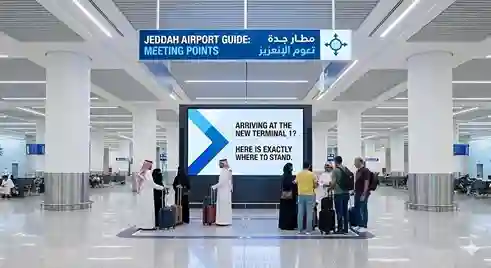
Jeddah Airport movement changes by terminal, airline, and arrival hour. We confirm the right meeting zone for Terminal 1 and North Terminal bookings in advance, and we keep pickup logic practical for families that need extra time after immigration. This avoids the common mistake of standing in the wrong lane while drivers circle multiple pickup points.
For pilgrims arriving through Hajj-oriented traffic windows, we focus on simple handover steps: terminal, landmark, and message confirmation before curbside movement. This structure is especially useful for first-time visitors who are unfamiliar with KAIA layout and want predictable coordination instead of competing with on-arrival ride offers.
- Share flight number, terminal, and expected landing time
- Send final passenger and luggage count
- Keep one active WhatsApp number for coordination
Related links: Jeddah Airport transfer rates • Book your ride • Airport Transfers • Luggage & Taxi Guide
MED airport to Markazia and Masjid Nabawi hotel zones
Madinah arrivals are often short-distance but high-pressure because many travelers want to reach Markazia hotels near Masjid Nabawi quickly. Our MED transfer flow keeps that movement direct, with fixed rates and route confirmation from airport to hotel instead of ad-hoc price negotiation after landing.
The MED to Markazia run is usually brief, but confusion around pickup points can still delay families. We solve this with pre-confirmed details in writing, so your group knows where to stand, what to send if baggage is late, and how to keep dispatch updated if your arrival timeline shifts.
Related links: Group Transport • Airport Transfers • Luggage & Taxi Guide
Why pre-booked transfer beats walk-up taxi, Uber, and SAPTCO
Walk-up airport taxis can be useful for solo travelers, but group pilgrims often face unclear fare terms, language barriers, and pressure to decide quickly. Uber and app rides may surge during peak windows and can require repeated cancellations if luggage size or seat capacity does not match reality. SAPTCO bus options are budget-friendly but usually require additional transfer steps, queueing, and hotel-last-mile handling.
A private airport transfer gives a more controlled experience: fixed fare before travel day, correct vehicle size for family and bags, and direct point-to-point movement without intermediate transfer stress. For elderly pilgrims and families with children, this reliability usually matters more than chasing uncertain app discounts at the curb.
Related links: Group Transport • Wheelchair Accessible • Airport Transfers • Ladies Only Travel Guide • Luggage & Taxi Guide • Transport for the Elderly
Flight delay handling and fixed fare discipline
Delays are normal in international travel. Our process is designed to absorb realistic flight shifts when updates are shared early. You keep the same booking thread, the same agreed route, and clear communication around revised arrival timing rather than restarting the booking process from zero.
Fixed pricing is equally important. We confirm route and class before pickup, so you are not renegotiating cost after baggage claim. This protects your budget and prevents the misunderstandings that usually happen when families try to compare multiple live quotes while standing in busy arrival zones.
Related links: Luggage & Taxi Guide
How terminal complexity affects pickup planning at KAIA
KAIA pickup planning changes significantly between Terminal 1 and North Terminal, even when two flights land within a short window. Terminal 1 often has wider circulation and clearer exit corridors, while North Terminal movement can feel compressed during peak arrivals. If pickup instructions ignore those differences, families may walk to the wrong lane, drivers may wait at a different curb, and valuable time is lost before anyone is seated in the vehicle.
Our terminal-specific process starts before landing: airline check, expected arrival hall, and a written meeting landmark that can be identified quickly under crowd pressure. We also plan for realistic immigration and baggage timelines, because long-haul pilgrims with several suitcases rarely move at the same pace as light solo travelers. This pre-work keeps everyone aligned on where to stand, when to message dispatch, and when to move toward the loading area.
The result is smoother handover and less curbside stress. Instead of guessing between multiple pickup points or accepting random offers, your family follows one confirmed path from arrivals to hotel transfer. Terminal complexity is unavoidable at major airports, but confusion is optional when pickup logic reflects the actual layout and passenger profile.
We also account for practical variables such as prayer-time traffic peaks, stroller handling time, and families who prefer to regroup before leaving arrivals. Building these details into terminal-specific planning keeps pickup realistic and protects your first hotel transfer from avoidable delays.
Related links: Manage Booking • Ladies Only Travel Guide • Luggage & Taxi Guide
Group family coordination at KAIA versus solo traveler logistics
A solo traveler can usually adjust quickly at the airport: one bag, one phone, one decision maker. Family groups at KAIA operate differently. One person may clear immigration early while others wait for strollers, wheelchairs, or delayed luggage. Children need supervision, elders need a slower walking pace, and the group can split unintentionally if coordination is weak. Effective transport planning must account for those realities before the aircraft even lands.
For group arrivals, we recommend one lead coordinator who keeps the active WhatsApp line, confirms final passenger headcount, and updates dispatch once everyone reaches the designated meeting landmark. This reduces duplicate messages and prevents conflicting instructions. It also helps drivers prepare the right loading sequence, especially when large suitcases, zamzam containers, or mobility aids need orderly placement before departure.
Solo travelers still benefit from pre-booked structure, but families gain the biggest operational advantage: fewer missed handoffs, faster boarding, and clearer route execution to Makkah or Madinah hotels. By treating airport pickup as a group operation rather than a simple ride request, you protect rest time, maintain prayer schedules, and begin the journey with calm instead of crowd pressure.
When coordination is managed this way, families spend less time making repeated calls and more time settling after arrival. The transfer becomes a reliable continuation of the journey rather than an exhausting airport puzzle solved under pressure.
Related links: Book your ride • Group Transport • Airport Transfers • Manage Booking • Ladies Only Travel Guide • Luggage & Taxi Guide • Transport for the Elderly
Operational guidance before you travel
The strongest result from airport transfer service is not only reaching your destination. It is preserving energy, minimizing confusion, and keeping every transfer step predictable from booking to drop-off. Pilgrims who travel with written route confirmation, realistic timing, and proper vehicle fit usually avoid the common issues that consume time and patience.
Operational clarity is especially important in Saudi pilgrimage cities where terminal exits, hotel pickup zones, and prayer-time traffic can change movement quality quickly. A service-first approach gives your family one structured flow instead of repeated decisions under pressure.
Before confirmation, share full details once: date, pickup window, passenger count, luggage profile, and any mobility or privacy requirements. This simple checklist helps dispatch assign the right vehicle class early and reduces same-day service changes.
Detailed planning notes for this service category
High-quality service execution depends on route-aware preparation, not just vehicle assignment. A well-planned booking keeps pickup landmarks precise, class fit realistic, and timing buffers aligned with actual pilgrimage movement patterns. This is especially important when your itinerary combines airport transfer, city rides, and intercity travel in one journey.
Families often benefit from a “decision lock” approach: finalize core route sequence first, then freeze class and fare, then share one final confirmation summary with all travelers. This reduces repeated negotiation and helps every family member understand the same operational plan. In practice, this simple discipline prevents most avoidable delays and miscommunication.
If your travel includes elders, children, or mobility needs, add comfort assumptions directly to your booking notes. Mention boarding pace, preferred stop style, and practical luggage profile so dispatch can optimize routing from the beginning. Service-level clarity at this stage usually saves far more time and stress than any last-minute adjustment during the day of travel.
For multi-leg plans, keep one active WhatsApp thread from first inquiry to final drop-off. Centralized communication improves accountability and makes route changes easier to manage if schedules move. The objective is consistent execution across every segment, so your pilgrimage remains spiritually focused and logistically stable.
Another high-impact practice is pre-assigning a family coordinator who confirms final departure readiness before each leg. When one person tracks boarding progress, luggage completion, and route checkpoint clarity, vehicles leave on time and arrival stress drops sharply. This is especially useful for larger or mixed-age groups using services that involve multiple stops and timing-sensitive handovers.
Related route pricing snapshot
| Route | Sedan | Staria | Yukon | Hiace | Coaster | Details |
|---|---|---|---|---|---|---|
Jeddah Airport → Makkah Hotel 90 km • 1 hr 15 min | 250 SAR | 300 SAR | 500 SAR | 350 SAR | 600 SAR | View Route |
Jeddah Airport → Madinah Hotel 420 km • 4 hr | 450 SAR | 550 SAR | 1200 SAR | 650 SAR | 1100 SAR | View Route |
Madinah Airport → Madinah Hotel 18 km • 25 min | 170 SAR | 200 SAR | 300 SAR | 300 SAR | 500 SAR | View Route |
Makkah Hotel → Jeddah Airport 90 km • 1 hr 15 min | 200 SAR | 250 SAR | 500 SAR | 300 SAR | 500 SAR | View Route |
Frequently asked questions
Key answers for this service before you confirm your booking.
Where do I meet my driver at Jeddah Airport?▼
Your meeting point is shared in advance based on your terminal and airline. Stay at the confirmed landmark and message us before moving to curbside.
What if my flight is delayed?▼
Send the updated arrival status on WhatsApp as soon as possible so dispatch can adjust timing and keep your pickup coordinated.
Do you serve both Terminal 1 and North Terminal?▼
Yes. We coordinate pickups from Terminal 1, North Terminal, and KAIA arrival flows with terminal-specific instructions.
Is there a waiting fee?▼
Normal operational waiting is planned into confirmed pickups. For major delays, we discuss updates transparently before travel continues.
Can you do a domestic to international terminal transfer?▼
Yes. We can arrange inter-terminal transfers when your itinerary requires domestic-to-international movement at KAIA.
How do you coordinate pickup if family members exit immigration at different times?▼
Use one lead coordinator and keep all updates in one WhatsApp thread; dispatch adjusts handover timing until the full group reaches the confirmed meeting landmark.
Can we pre-plan extra luggage handling for elders and children?▼
Yes. Share your exact bag profile and mobility needs in advance so boarding order and vehicle loading are planned before arrival day.